

CREATe Therapeutics Achieves Complete Seizure Prevention in a Severe Model of Focal Epilepsy
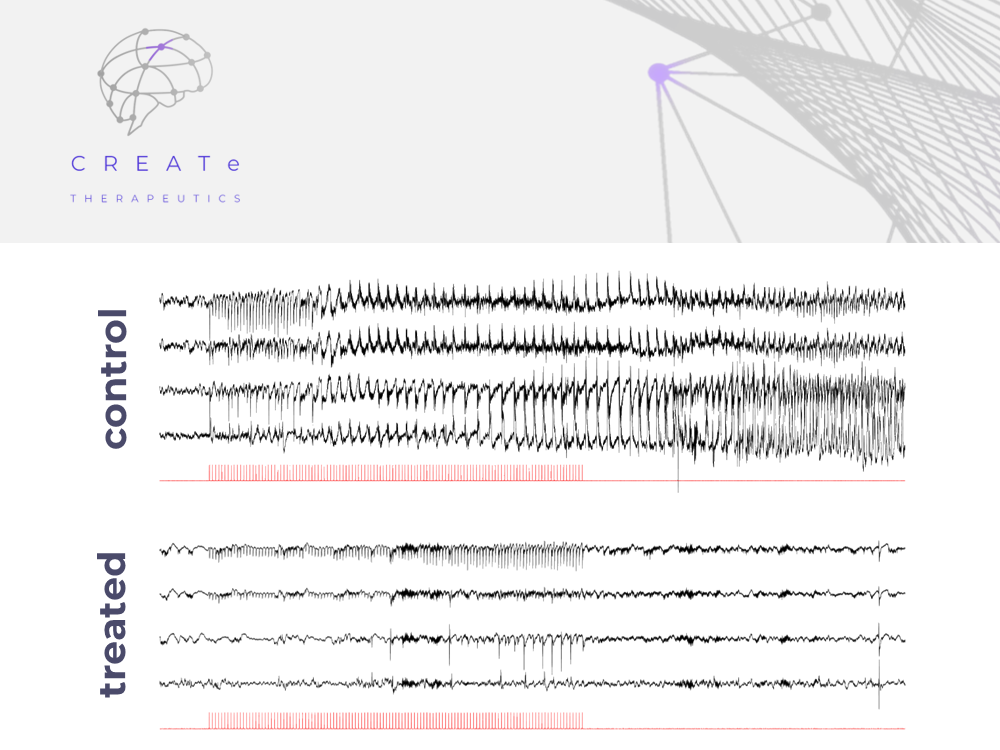
Complete prevention of seizures in a particularly severe and fast-progressing in vivo disease model

Tamás Kitka PhD - Managing Director

CREATe Tx logo
Breakthrough Preclinical Result in Epilepsy Treatment
These findings strengthen our confidence as we progress toward clinical development for patients with very limited therapeutic options.”
LEIDEN, NETHERLANDS, February 6, 2026 /EINPresswire.com/ -- CREATe Therapeutics (CREATe Tx) today announced a major breakthrough demonstrating complete prevention of seizures in a particularly severe and fast-progressing in vivo disease model of focal epilepsy using its proprietary neuromodulation technology. — Tamás Kitka, PhD, Co-Founder and Managing Director of CREATe Tx
The study addressed a highly challenging form of focal epilepsy in which seizures arise in the cortex and spread almost instantly through deep brain circuits, leading to sudden and widespread brain involvement. This rapid seizure onset and spread is associated with poor clinical response to existing anti-seizure medications and represents a significant unmet medical need.
CREATe Tx tested its technology in an aggressive experimental model designed to directly overstimulate the brain pathways responsible for rapid seizure initiation and propagation. Despite the severity of this model, application of CREATe Tx’s proprietary technology fully prevented the seizure from occurring, demonstrating robust control of pathological brain activity. The results will be presented in three prestigious international conferences in the upcoming two months: Advanced Therapies Week, BIO-Europe Spring and LSX World Congress Europe.
About the Platform - a precise and controllable neuromodulation technology
CREATe Tx’s platform combines the precision of gene therapy with the flexibility of traditional drug treatment. It works by delivering engineered receptors to specific neurons that drive disease. These receptors remain inactive until they are activated by a matching small-molecule drug taken orally. The drug acts only on neurons that carry the engineered receptors, producing a highly targeted therapeutic effect.
This design enables precise and adjustable control of specific brain circuits, avoiding the widespread side effects commonly associated with conventional epilepsy medications. By acting directly on the neurons that trigger seizures, this technology has the potential to address forms of epilepsy that are currently untreatable. At the same time, this targeted approach is expected to deliver a significantly improved safety profile compared with existing therapies.
Next steps and development plans
Based on these results, CREATe Tx is launching a USD 3 million fundraising round to accelerate technology optimization and advance toward development candidate selection. The company plans to enter IND-enabling preclinical development within the next two years.
“These results demonstrate that our technology can fully suppress seizures even in one of the most aggressive epilepsy models available,” said Tamás Kitka, PhD, Founder and Managing Director of CREATe Tx. “These findings strengthen our confidence as we progress toward clinical development for patients with very limited therapeutic options.”
About CREATe Therapeutics
CREATe Therapeutics (CREATe Tx), a spin-off of VRG Tx, is a biotechnology company developing a new class of drug-controlled gene therapies for precise neuromodulation. The company’s platform enables selective and adjustable control of specific brain circuits implicated in severe neurological disorders.
Initially focused on treatment-resistant focal epilepsy, CREATe Tx aims to expand its technology to additional central nervous system disorders where existing therapies fail to adequately control disease-driving neural activity.
Tamás Kitka
CREATe Therapeutics
+36 30 349 5972
tamas.kitka@createtherapeutics.com
Visit us on social media:
LinkedIn
Legal Disclaimer:
EIN Presswire provides this news content "as is" without warranty of any kind. We do not accept any responsibility or liability for the accuracy, content, images, videos, licenses, completeness, legality, or reliability of the information contained in this article. If you have any complaints or copyright issues related to this article, kindly contact the author above.
